


![Physical Geography II-Collecting Rocks & Minerals [2000]](/pictures/1084235.jpg) Physical Geography II-Collecting Rocks & Minerals | DVD | (25/11/2012)
from £32.37
| Saving you £-7.38 (-29.50%)
| RRP
Physical Geography II-Collecting Rocks & Minerals | DVD | (25/11/2012)
from £32.37
| Saving you £-7.38 (-29.50%)
| RRP Discover the Forces and Life Forms that Shape our World. The Earth is made of rock from the tallest mountains to the floor of the ocean. Rocks are all around most of us. Thousands of different types of rocks and minerals have been found on Earth and this program examines how rocks are continually changing. It looks at the types of rocks - Igneous Sedimentary and Metamorphic and teaches students how to start their own collection including; how to identify rocks where to find rocks collecting equipment and housing and enlarging their collection.
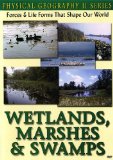 Physical Geography II - Wetlands, Marshes and Swamps | DVD | (25/11/2012)
from £N/A
| Saving you £N/A (N/A%)
| RRP
Physical Geography II - Wetlands, Marshes and Swamps | DVD | (25/11/2012)
from £N/A
| Saving you £N/A (N/A%)
| RRP Discover the Forces and Life Forms that Shape our World. This program explores the watery world of the wetlands. Students learn their origins the plant and animal life within them and why marshes are important to the food chain and to us. This program brings the Florida Everglades into the classroom leading students on a tour of the River of Grass. The various types of wetlands such as bogs and marshes are discussed as are the many natural habitats they provide. Students will gain a new appreciation for drinking water as they discover the wetlands role in filtering water pollution.
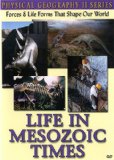 Physical Geography II - Life in Mesozoic Times | DVD | (25/11/2012)
from £32.37
| Saving you £-7.38 (-29.50%)
| RRP
Physical Geography II - Life in Mesozoic Times | DVD | (25/11/2012)
from £32.37
| Saving you £-7.38 (-29.50%)
| RRP Discover the Forces and Life Forms that Shape our World. This program explores the major life forms which lived during the Mesozoic Era the time span from 245 million years ago to 65 million years ago. At the beginning of the Mesozoic Era the major landmasses were joined together into a super-continent called Pangaea so animals could easily move from place to place. Temperatures were much warmer than they are today and even the ice caps at the north and south poles were absent. In this environment life flourished and we saw the development of huge reptile-like animals such as the dinosaurs. Life during Mesozoic times also occurred in the oceans and new plant forms including flowering plants began to spread across the earth. About 65 million years ago most of the larger dinosaurs vanished and this program discusses why this extinction event took place.
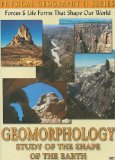 Physical Geography II-Geomorphology | DVD | (25/11/2012)
from £32.37
| Saving you £-7.38 (-29.50%)
| RRP
Physical Geography II-Geomorphology | DVD | (25/11/2012)
from £32.37
| Saving you £-7.38 (-29.50%)
| RRP Discover the Forces and Life Forms that Shape our World. This program introduces students to the various forces which have shaped our earth. These include wind running water glaciers volcanoes temperature changes gravity ocean currents faulting and folding. The first part of the program introduces students to each of these concepts followed by fifty land formations and information about each formation.
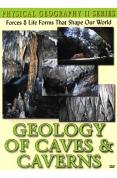 Physical Geography - Geology Of Caves And Caverns | DVD | (25/11/2012)
from £26.98
| Saving you £-1.99 (-8.00%)
| RRP
Physical Geography - Geology Of Caves And Caverns | DVD | (25/11/2012)
from £26.98
| Saving you £-1.99 (-8.00%)
| RRP Discover the Forces and Life Forms that Shape our World! This program illustrates what water can do below the earth's surface over long periods of time. Using animated and real life sequences this program explores some important caves their formations and teaches students how underground water dissolves limestone to form caves caverns stalagmites stalagtites and box-fork formations.
![Physical Geography - Why Is The Ocean Salty? [2005]](/pictures/1082694.jpg) Physical Geography - Why Is The Ocean Salty? | DVD | (25/11/2012)
from £32.37
| Saving you £-7.38 (-29.50%)
| RRP
Physical Geography - Why Is The Ocean Salty? | DVD | (25/11/2012)
from £32.37
| Saving you £-7.38 (-29.50%)
| RRP Discover the Forces and Life Forms that Shape our World! All water even rainwater contains dissolved chemicals which scientists call ""Salts."" These salts eventually wash down into rivers and streams and eventually find their way into oceans and seas. Subjects covered include: 1. The origin of the sea. 2. The sources of salt. 3. The components of sea water. 4. The salinity of the sea and its variability. 5. How sea life affects sea waters composition.
![Physical Geography II - Glaciers: Clues to Future Climate [2005]](/pictures/1088172.jpg) Physical Geography II - Glaciers: Clues to Future Climate | DVD | (25/11/2012)
from £32.37
| Saving you £-7.38 (-29.50%)
| RRP
Physical Geography II - Glaciers: Clues to Future Climate | DVD | (25/11/2012)
from £32.37
| Saving you £-7.38 (-29.50%)
| RRP Present day glaciers have considerable economic importance in many areas. In the Western United States glaciers are considered to be frozen reservoirs which release water during the warmer summer months. They are also of considerable importance to the irrigation of crops and hydroelectric power and to feeding underground water reservoirs. For this reason scientists have been studying glaciers around the world. Explore how glaciologists are using new scientific tools to study glaciers on the surface of the earth. See how satellites keep track of glacial growth or shrinkage in places like Antarctica Greenland and Iceland.

Please wait. Loading...
This site uses cookies.
More details in our privacy policy