


![Sunrise [Masters of Cinema] [DVD]](/pictures/1096027.jpg) Sunrise | DVD | (21/09/2009)
from £26.98
| Saving you £-6.99 (-35.00%)
| RRP
Sunrise | DVD | (21/09/2009)
from £26.98
| Saving you £-6.99 (-35.00%)
| RRP The culmination of one of the greatest careers in film history F. W. Murnau's Sunrise blends a story of fable-like simplicity with unparalleled visual imagination and technical ingenuity. Invited to Hollywood by William Fox and given total artistic freedom on any project he wished Murnau's tale of the idyllic marriage of a peasant couple (George O'Brien and Janet Gaynor) threatened by a Machiavellian seductress from the city (Margaret Livingston) created a milestone of film expressionism. Made in the twilight of the silent era it became both a swan song for a vanishing medium and one of the few films to instantly achieve legendary status. Winner of three Oscars for Best Actress (Gaynor) Cinematography and a never-repeated award for Unique and Artistic Picture its influence and stature has only grown with each passing year. The Masters of Cinema Series is proud to present a new 2-disc special edition of the film including an all-new alternate version recently discovered in a Czech archive of a higher visual quality than any other known source.
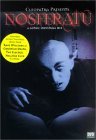 Nosferatu | DVD | (06/12/2004)
from £10.07
| Saving you £9.18 (104.20%)
| RRP
Nosferatu | DVD | (06/12/2004)
from £10.07
| Saving you £9.18 (104.20%)
| RRP This DVD combines the original Dracula film Nosferatu (1922) enhanced by a Gothic industrial soundtrack from some of artists that were directly influenced by F.W. Murnau's Classic vampire film. An Estate Agent's Clerk (Gustav Von Wangenheim) in the city of Bremen leaves his bride (Greta Schroeder) to conduct business in the distant Carpathian mountains with an eccentric client named Graf Orlok (Max Schrek). During a long and hazardous journey the closer he gets to his destination the more terrified are the people he meets. What he finds when he reached Orlok's sinister castle is enough to make the flesh of the most devoted horror fan creep. Featuring music by: Electric Hellfire Club Christian Death Rozz Williams and more...
![Sunrise [Masters of Cinema] [Blu-ray]](/pictures/1096028.jpg) Sunrise | Blu Ray | (21/09/2009)
from £N/A
| Saving you £N/A (N/A%)
| RRP
Sunrise | Blu Ray | (21/09/2009)
from £N/A
| Saving you £N/A (N/A%)
| RRP The culmination of one of the greatest careers in film history F. W. Murnau's Sunrise blends a story of fable-like simplicity with unparalleled visual imagination and technical ingenuity. Invited to Hollywood by William Fox and given total artistic freedom on any project he wished Murnau's tale of the idyllic marriage of a peasant couple (George O'Brien and Janet Gaynor) threatened by a Machiavellian seductress from the city (Margaret Livingston) created a milestone of film expressionism. Made in the twilight of the silent era it became both a swan song for a vanishing medium and one of the few films to instantly achieve legendary status. Winner of three Oscars for Best Actress (Gaynor) Cinematography and a never-repeated award for Unique and Artistic Picture its influence and stature has only grown with each passing year. The Masters of Cinema Series is proud to present a new 2-disc special edition of the film including an all-new alternate version recently discovered in a Czech archive of a higher visual quality than any other known source.
![Tabu (A Story of the South Seas) [Masters of Cinema] [1931]](/pictures/1076532.jpg) Tabu (A Story of the South Seas) | DVD | (19/11/2007)
from £32.37
| Saving you £-12.38 (-61.90%)
| RRP
Tabu (A Story of the South Seas) | DVD | (19/11/2007)
from £32.37
| Saving you £-12.38 (-61.90%)
| RRP In 1929 F.W. Murnau (Nosferatu Faust Sunrise) one of the greatest of all film directors invited leading documentarist Robert Flaherty (Nanook of the North Moana Man of Aran) to collaborate on a film to be be shot on location in Tahiti a Polynesian idyll in which Murnau imagined a cast of island actors would provide a new form of authentic drama and offer rare insight into their ""primitive"" culture. The result of their collaboration was Tabu a film that depicts the details of indigenous island life to tell a mythical tale that is rich in the universal themes of desire and loss. Subtitled a ""Story of the South Seas"" Tabu concerns a Tahitian fisherman (played by an islander Matahi) and his love for a young woman (played by fellow islander Reri who went on to star on Broadway) whose body has been consecrated to the gods rendering her tabu as far as mortal men are concerned. The lovers flee their island and its restrictive traditions but will their love prevail in the ""civilised"" world? Though Flaherty eventually left the film following a series of artistic and other differences (the film is credited as being ""told by"" Murnau and Flaherty but directed by Murnau alone) what their South Seas adventure left behind was an Oscar winning film (the Academy Award went to cinematographer Floyd Crosby for his lyrical vision of island life) that is both poetic and simple in tone. The Masters of Cinema Series is proud to present completely uncensored and fully restored this landmark film of rare exoticism and magical beauty described by critic Lotte Eisner in 1931 as ""the apogee of the art of the silent film"".
![City Girl [Masters of Cinema] [Blu-ray]](/pictures/1098456.jpg) City Girl | Blu Ray | (22/02/2010)
from £N/A
| Saving you £N/A (N/A%)
| RRP
City Girl | Blu Ray | (22/02/2010)
from £N/A
| Saving you £N/A (N/A%)
| RRP After the visual fireworks of Sunrise and the now-lost splendour of 4 Devils F.W. Murnau turned his attention to this vivid painterly study of an impulsive and fragile marriage among the wheatfields of Minnesota. During a brief stay in Chicago innocent farmer's son Lem falls for and weds Kate a hard-bitten but lonely waitress. Upon bringing her home at the start of harvest time the honeymoon soon turns into a claustrophobic struggle as they contend with the bitter scorn of his father and the invasive leering jealousy of the farm's labouring community. Tenderly romantic and tough-minded in equal measure City Girl is one of cinema's great pastorals featuring some of the most delicate performances Murnau ever directed and influencing filmmakers such as Terrence Malick and Jean Vigo.
![City Girl [DVD] [1930]](/pictures/1106114.jpg) City Girl | DVD | (11/04/2011)
from £26.98
| Saving you £-6.99 (N/A%)
| RRP
City Girl | DVD | (11/04/2011)
from £26.98
| Saving you £-6.99 (N/A%)
| RRP After the visual fireworks of Sunrise and the now-lost splendour of 4 Devils F.W. Murnau turned his attention to this vivid painterly study of an impulsive and fragile marriage among the wheatfields of Minnesota. During a brief stay in Chicago innocent farmer's son Lem falls for and weds Kate a hard-bitten but lonely waitress. Upon bringing her home at the start of harvest time the honeymoon soon turns into a claustrophobic struggle as they contend with the bitter scorn of his father and the invasive leering jealousy of the farm's labouring community. Tenderly romantic and tough-minded in equal measure City Girl is one of cinema's great pastorals featuring some of the most delicate performances Murnau ever directed and influencing filmmakers such as Terrence Malick and Jean Vigo.
![The Last Laugh [1924]](/pictures/1012034.jpg) The Last Laugh | DVD | (23/02/2004)
from £N/A
| Saving you £N/A (N/A%)
| RRP
The Last Laugh | DVD | (23/02/2004)
from £N/A
| Saving you £N/A (N/A%)
| RRP One of the most influential silent films of all time, FW Murnau's street-drama tragedy The Last Laugh is a compendium of silent film techniques handled with a new sophistication. The story concerns an ageing hotel porter who loses his job to a younger, more dashing man and suffers the humiliation of being demoted to washroom attendant. When the hearty, rather pompous Emil Jannings is stripped of the dignified uniform of his station, he transforms into a scared little man scurrying through the shadows to hide his demotion from friends and family. Murnau captures the humiliation and calamitous fallout from the demotion (he loses not just his self-respect, but the esteem of his neighbours and even loses his apartment) in haunting, expressionistic images that magnify the petty events into tragic melodrama. The story seems a little extreme even for the genre but it's never less than a harrowing, subjective experience, even with the rather fanciful happy ending tacked on the end of it. Murnau famously throws the camera into motion--one of his most celebrated shots takes the viewers up an elevator, through the grand hotel lobby, and out the revolving glass door in a single smooth shot--and it hasn't stopped moving since. --Sean Axmaker
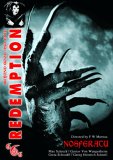 Nosferatu | DVD | (09/01/2006)
from £N/A
| Saving you £N/A (N/A%)
| RRP
Nosferatu | DVD | (09/01/2006)
from £N/A
| Saving you £N/A (N/A%)
| RRP F.W. Murnau's German silent classic is the original--and some say most frightening--Dracula adaptation taking Bram Stoker's novel and turning it into a haunting shadowy dream full of dread. Names had to be changed from the novel when Stoker's wife charged his novel was being filmed without proper permission. Running times vary depending upon versions of the film. Count Orlok the rodentlike vampire frighteningly portrayed by Max Schreck is perhaps the most animalistic screen portrayal of a vampire ever filmed. The design was copied by Werner Herzog in his 1979 remake and by Tobe Hooper for his telefilm of Stephen King's Salem's Lot that same year. Nosferatu is an eerie menacing film that should not be missed.
![Nosferatu [1922]](/pictures/1012910.jpg) Nosferatu | DVD | (21/01/2002)
from £13.98
| Saving you £6.01 (42.99%)
| RRP
Nosferatu | DVD | (21/01/2002)
from £13.98
| Saving you £6.01 (42.99%)
| RRP Made in 1922, FW Murnau's Expressionist masterpiece Nosferatu--A Symphony of Horrors is an unofficial but reasonably faithful condensation of parts of Bram Stoker's novel Dracula. Alongside Metropolis (1926) it is one of the very few European features from the 1920s that is still regularly shown, and apart from being the first great horror film it laid the foundations of the vampire genre to the present day. Wearing astonishing rodent-like make-up Max Schreck cuts such an iconic figure as the undead Count that the 2001 comedy-horror Shadow of the Vampire suggested he wasn't acting at all! Although Murnau's film was revolutionary and technically adventurous for the time, a modern audience will have to make some allowances for the fact the movie now seems both dated and technically primitive: Murnau's stylised lighting and camera effects have been endlessly imitated and improved upon since, and even its greatest defenders generally admit the film barely raises a shudder, let alone a full-blooded scare. Nevertheless, Nosferatu holds a strange dreamlike grip on the imagination and its incalculable influence on fantasy and horror cinema means this is essential viewing for anyone seriously interested in the development of motion picture art. On the DVD: Presented in Academy at 1.37:1 and with James Bernard's new orchestral score in well-recorded stereo Nosferatu looks and sounds as good as it has in decades. Bernard, composer of Hammer's Dracula (1958) among others, has written a superior score that captures the film's subtitle, "A Symphony of Horrors", and truly brings the images alive in a way previous scores have not. This restored version presents for the first time on video or DVD the blue and brown tints of the original cinema prints and replicates the original hand-designed inter-title cards which with their distinctive designs make the film much more of a compete visual experience. More importantly, this DVD offers approximately another quarter of an hour of material over the usually distributed American version. However, the restoration has not extended to repairing the many lines, scratches, variations in brilliance and other evidence of print damage present throughout. The film is perfectly watchable, being very much what one would expect from the early 1920s. There are text biographies and notes on Murnau and James Bernard, DVD-ROM material on the restoration of the print and a perceptive 23-minute discussion by film expert Christopher Frayling on many aspects of the movie. --Gary S Dalkin
![Tartuffe [1926]](/pictures/1011373.jpg) Tartuffe | DVD | (24/01/2005)
from £N/A
| Saving you £N/A (N/A%)
| RRP
Tartuffe | DVD | (24/01/2005)
from £N/A
| Saving you £N/A (N/A%)
| RRP A devious housekeeper convinces her master to cut his worthy grandson out of his will and to leave the riches to her instead. The grandson disguised as the projectionist of a travelling cinema show flatters his way into the home to project a film of Tartuffe in an attempt to open his grandfather's eyes. F. W. Murnau made this film adaptation of Moliere's satire for UFA early in 1925 and it was released the following year shortly followed by 'Faust'. By presenting the play as a fi

Please wait. Loading...
This site uses cookies.
More details in our privacy policy